


Snacking is part of life: whether you’re actually hungry, bored, or just want a treat, it’s normal to crave something to eat between meals. The trick is to be mindful of what you’re eating – and, if you’re living with type 1 diabetes (T1D), to think about how they impact your blood glucose levels.
We asked Dr Carmel Smart and Emma Fisher, paediatric diabetes dietitians at the John Hunter Children’s Hospital, for their advice on snacking for all people living with type 1 diabetes (T1D).
Here’s what they had to say, including their tips for tasty snacks, ‘good’ and ‘bad’ snacking, the best snack options for people with T1D, and how snacking can affect your blood glucose levels.
Snacking with T1D: good or bad?
So should you reach for the snacks when those cravings hit? The simple answer is it depends!
If incorporated into a routine eating plan, a couple of small snacks a day can help to meet our nutritional requirements, regulate our energy and boost our concentration throughout the day (particularly in growing children).
To tell the difference between “good” and “bad” snacking with T1D, we need to look at the amount we’re eating or drinking, how often we’re doing it, the type of food or drink, and how well if it’s being covered with insulin. There is a big difference between having a couple of planned portioned healthy snacks a day and grazing.
Grazing occurs when we frequently eat varied amounts of food at random times of the day/night, often close together. The quality of our diet often slips when we graze because we tend to choose high energy and nutrient poor options.
Grazing can impact many aspects of our health and lives, including the following.
| Our main meals | Grazing ruins our appetite for full meals, making us choose less nutritious foods or skip meals altogether. |
| Our teeth | Our teeth – Eating continuously (particularly sugary foods) is bad for teeth and can lead to tooth decay. |
| Our weight | If we eat too often, our body is unable to use up the energy we’re putting into it. Instead, it's stored, so we gain weight. |
| Our kids | Grazing is a common cause of fussy eating behaviours and meal refusal in children (which is an additional challenge for those living with T1D). |
Snacking and blood glucose levels
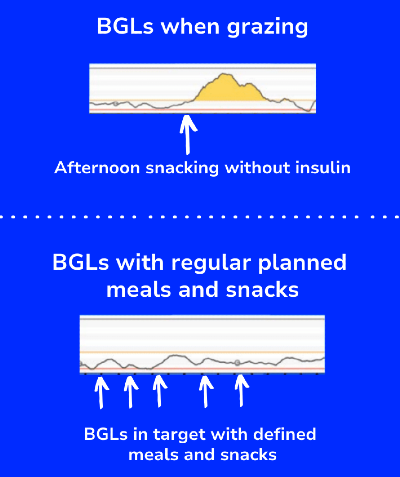
Frequent snacking with T1D can cause continual high BGLs. In fact, several studies have shown that those who skip meals and snack more than 2 times a day have a higher HbA1c. They also display less healthy dietary and leisure habits – for example, more screen time.
Conversely, routine meal patterns in children and young people using intensive insulin therapy has been associated with lower BGLs.
There are more benefits to keeping a routine, including making time for carb counting and giving insulin before eating.
The benefits of routine-led eating plans
People living with T1D should base their diet around a routine eating plan. By following a routine, you are more likely to think about food choice, check the portion for accurate carb counting, and give insulin before eating – helping to maintain BGLs in target. Spacing meals and snacks apart will also prevent insulin stacking and ensure you have a good appetite for healthy meals. Some tips for creating a routine include:
- focus on 3 bigger main meals
- make your snacks small and space them out – such as snacking 2-3 hours before and after meals during the day
- avoid eating before bed
- designate breaks for snacks and meals at home, like you would at school, to avoid continuous grazing
It’s also important to note that with intensive insulin therapy, snacks shouldn’t need to be eaten regularly to prevent hypos. Instead, they should be a quick, nutritious energy burst.
The CGM traces below highlight the difference between afternoon ‘grazing’ and a regular eating routine with a mid-morning and mid-afternoon snack.
How does sleep impact snacking?
A good night sleep is also important to prevent craving foods high in saturated fat and sugar. Studies show staying up late at night is related to skipping breakfast. This change in routine can lead to unhealthy snacking, which can cause excessive weight gain.
A good bedtime routine is important. It’s necessary to turn off all screens early to stop you staying awake.
So what’s a healthy snack (or poor quality snack)?
Poor quality snacks provide excess energy, high amounts of added sugars and unhealthy fats. Combined, these can result in too much weight gain.
Healthy snacks are food and drink choices that add nutritional value to our diet.
When snacking, it’s best to choose snacks that contain a source of protein, such as yoghurt or nuts, because these options fill you up and prevent over-eating. Vitamin C-rich fruits such as kiwi fruit, oranges and mandarins are also great snacks and can help prevent you catching a cold.
Check out recommended snack options below, or download your copy for future reference.

